Note: Domain rename is intended to be a supported method for renaming domains when domain renames are necessary; it is not intended to make domain rename a routine operation.The domain rename process is complex, and it requires a great deal of care in planning and execution. In addition, the time that is required for a complete domain rename operation is directly proportional to the size of an Active Directory forest in terms of its number of domains, domain controllers, and member computers. Therefore, although domain rename is possible, it should not be undertaken lightly.The domain rename operation is not supported in `Microsoft Exchange Server 2007` or `Exchange Server 2010`. DNS domain rename is supported in `Exchange Server 2003`. However, renaming of the NetBIOS domain name is not supported in any version of Exchange Server. Other non-Microsoft applications might also not support domain rename.
For this time easy Guide, I will show you all how to rename domain name in Windows Server 2016, the process is straightforward. but as usual. backup any necessary information and Server before you proceed & I always advice, please do this exercises in LAB Environment (Hyper-V). Don’t simply take any risk by doing this is production environment unless you have to. 😦 The existing domain is `Windows.ae` and I will rename it to `Sifad.local` #### **So, let get started.** 1 – Open your `System Properties` and check your `existing domain name`, if you see from my Windows Server 2016 `system properties`, my existing domain name is `Windows.ae`. This will be change to `Sifad.local` in the short while. 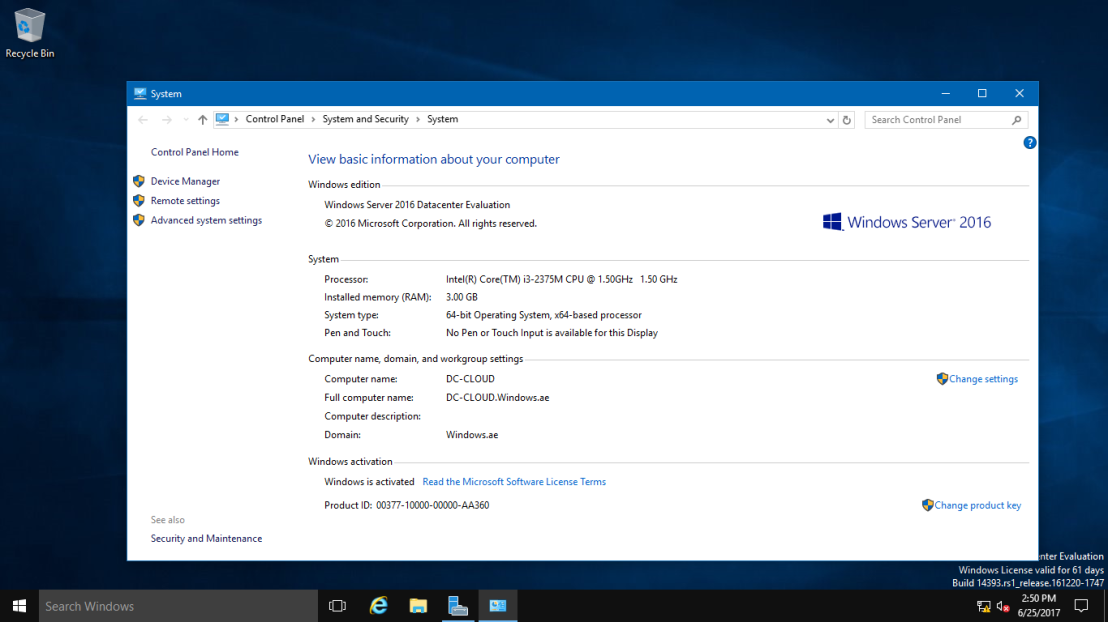 2 – Next, open your `Server Dashboard`, go to Tools & click `DNS` to open `DNS Manager`. 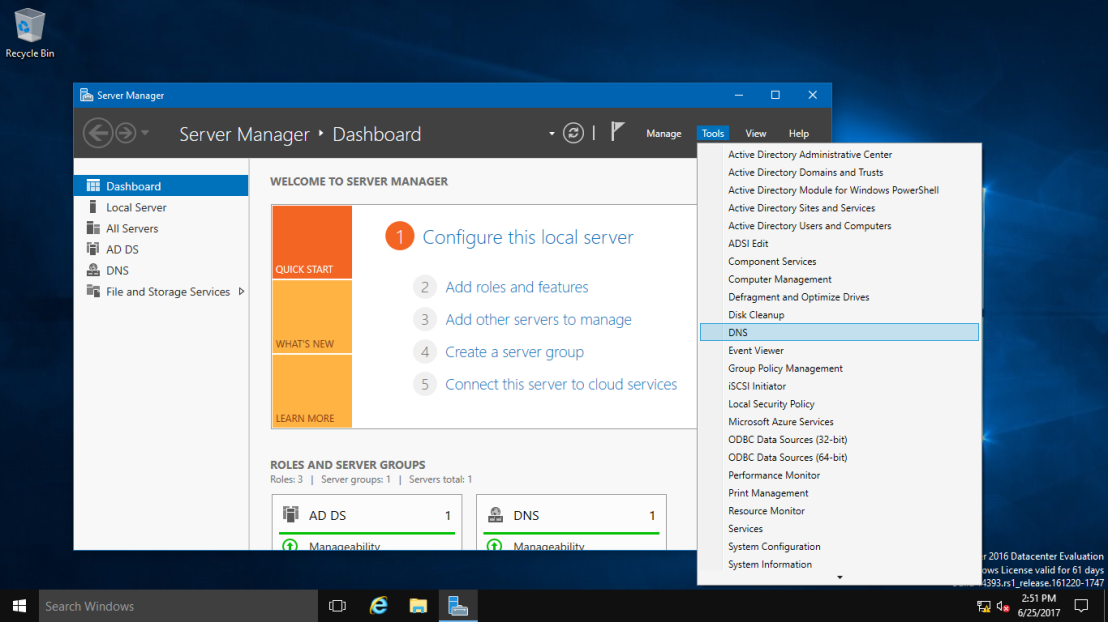 3 – on the `DNS Manager`, you must create the `New DNS Zone (Sifad.local)`, this is to make sure that after whole process successfully, your `member server and Windows clients can join to new Domain name`. To `create new DNS Zone`, Right Click `Forward Lookup Zone`, and click `New Zone` 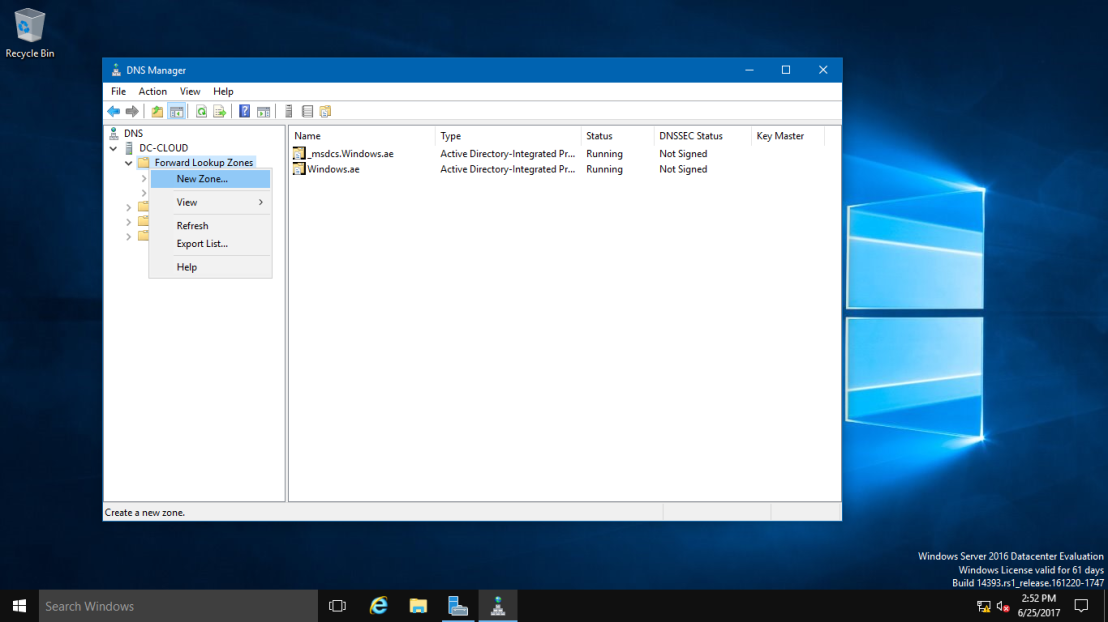 4 – On the `Welcome to the New Zone Wizard`, just click Next button. 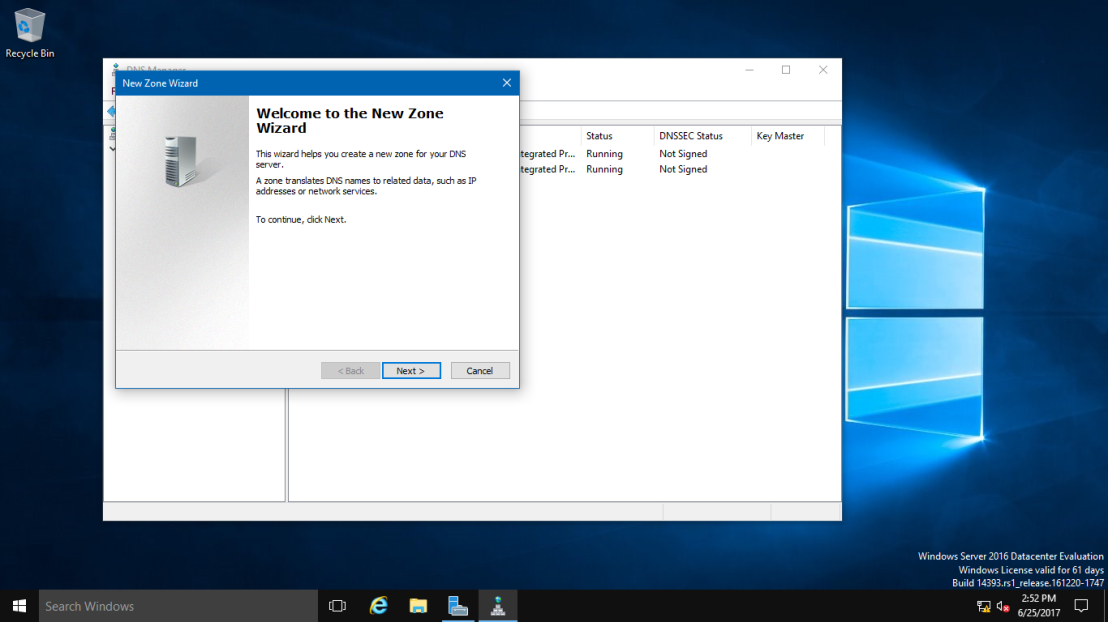 5 – On the Zone Type, Click `Primary Zone` and click Next. 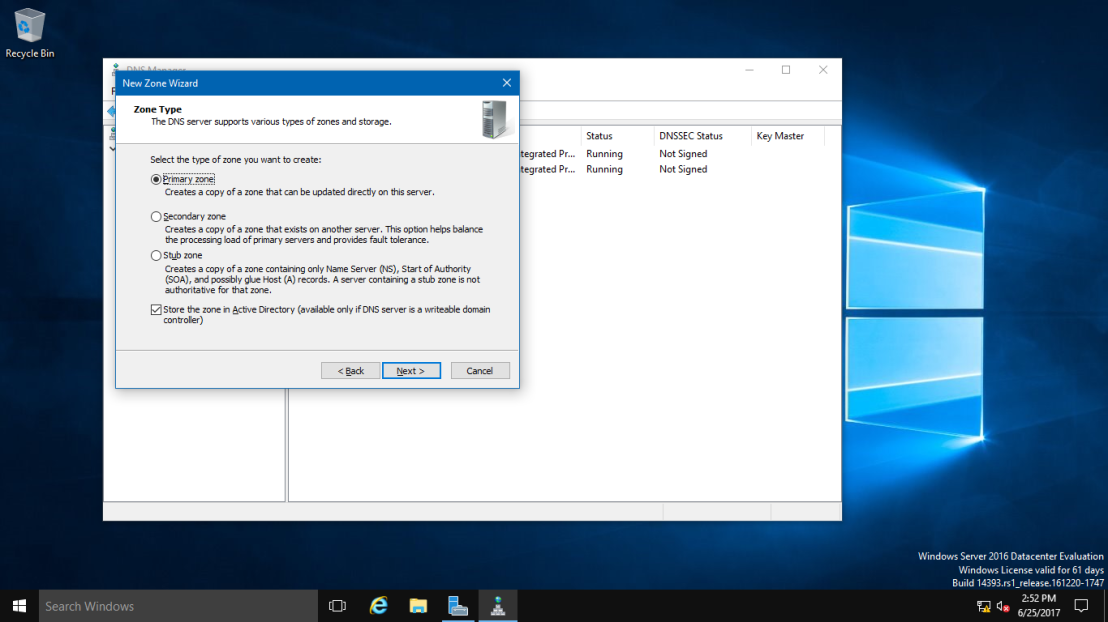 6 – On the `Active Directory Zone Replication Scope`, click button `To all DNS servers running on domain controllers in this domain: Windows.ae` and click Next. 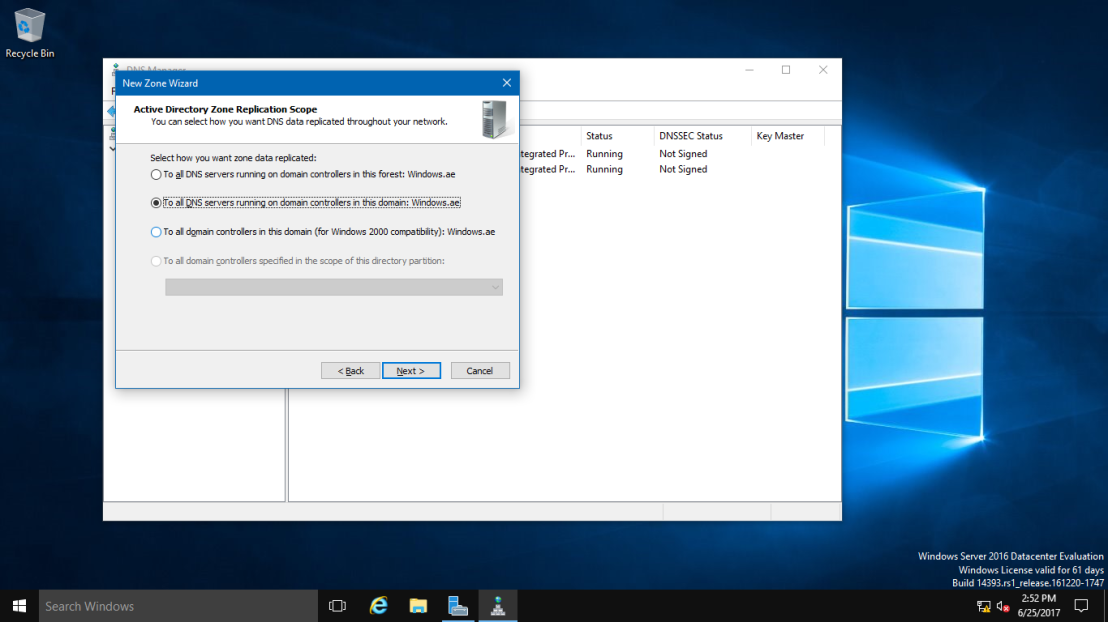 7 – In the `Zone Name`, key in your `New Domain Name`, my new Domain Name is `Sifad.local`. 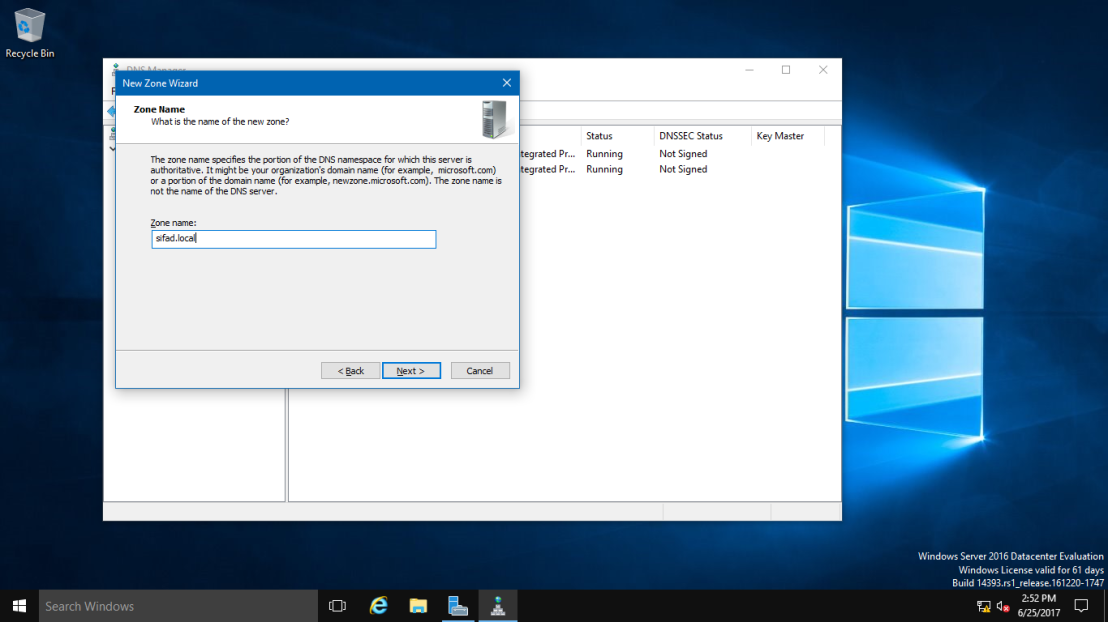 8 – On the `Dynamic Update, Click Allow only secure dynamic updates (recommended for Active Directory)`, and click Next. 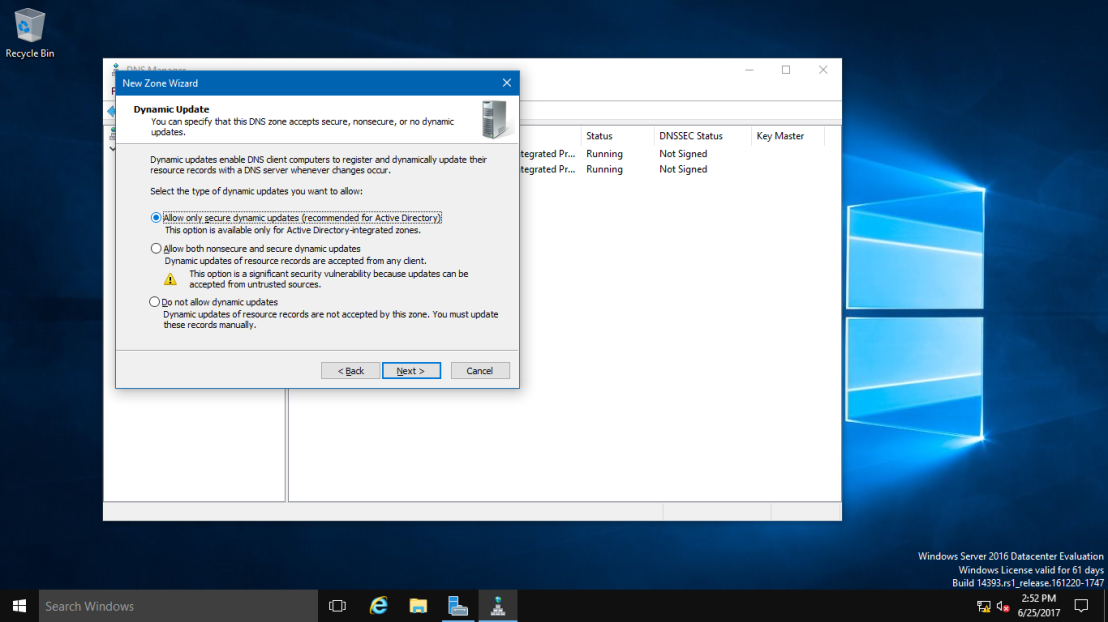 9 – On the `completing the New Zone Wizard`, click `Finish` to complete the process. 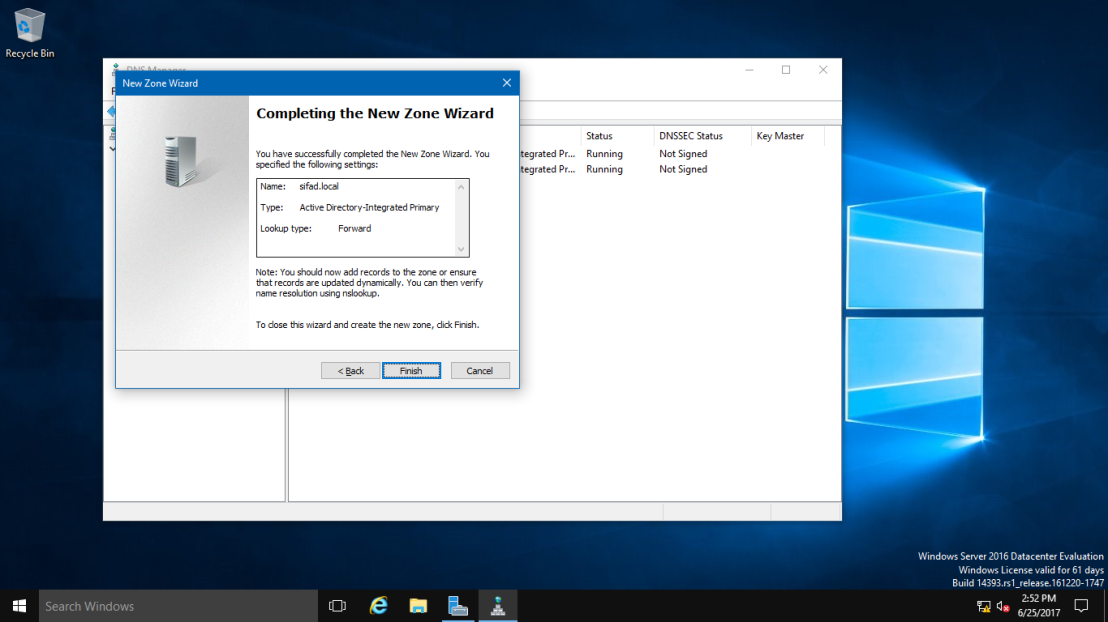 10 – On DNS Manager, you can see my new `Domain Name is listed (sifad.local)`. 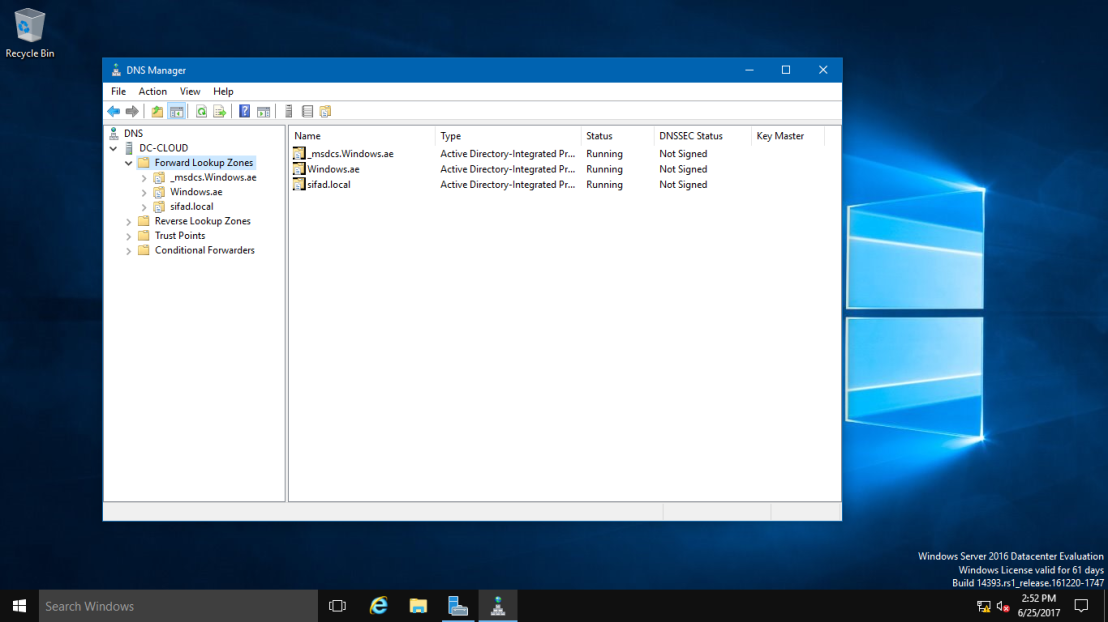 11 – Next, open `Command Prompt, run as administrator`. 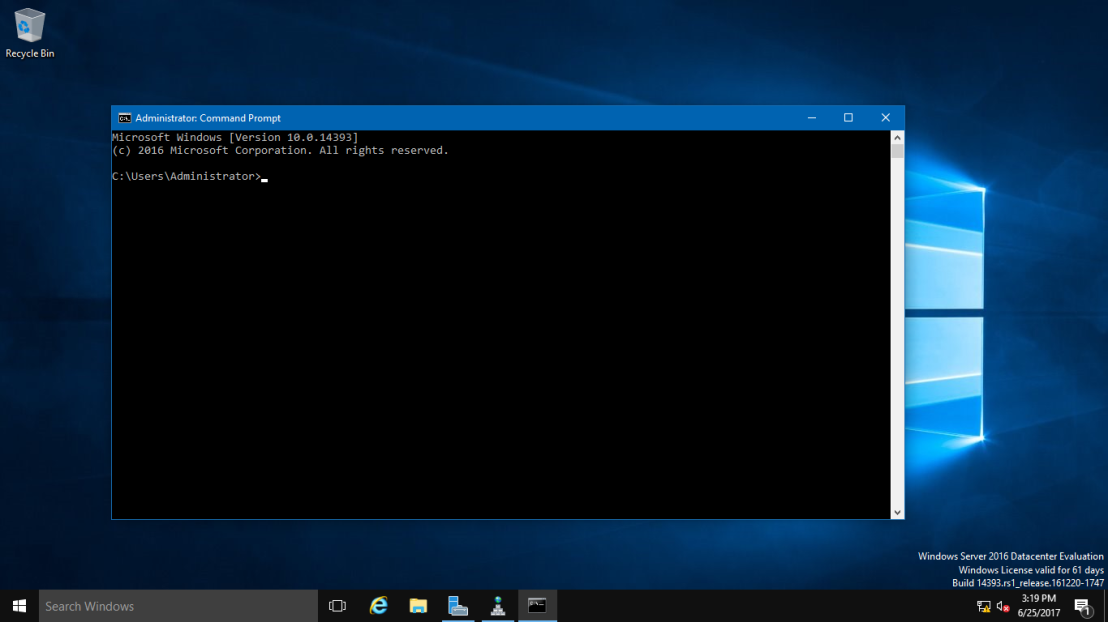 12 – In CMD, type `rendom /list` and press enter – this command use to generate a state file named `Domainlist.xml`. This file contains the current forest configuration. 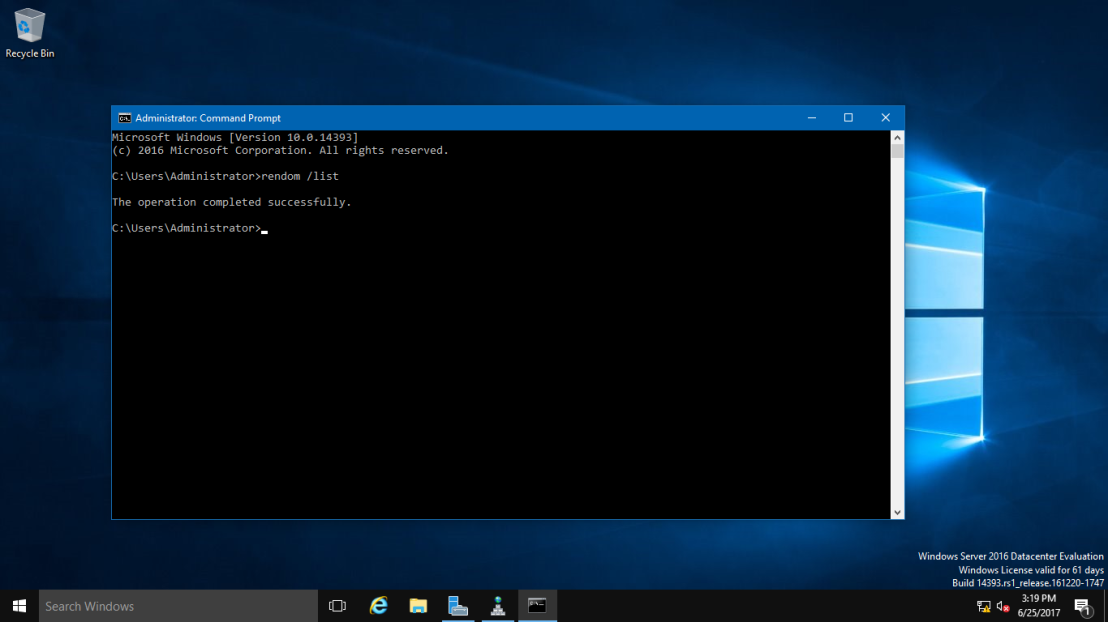 13 – Next, open computer and browse to `C:\Users\Administrator` folder to get your `Domainlist.xml`. 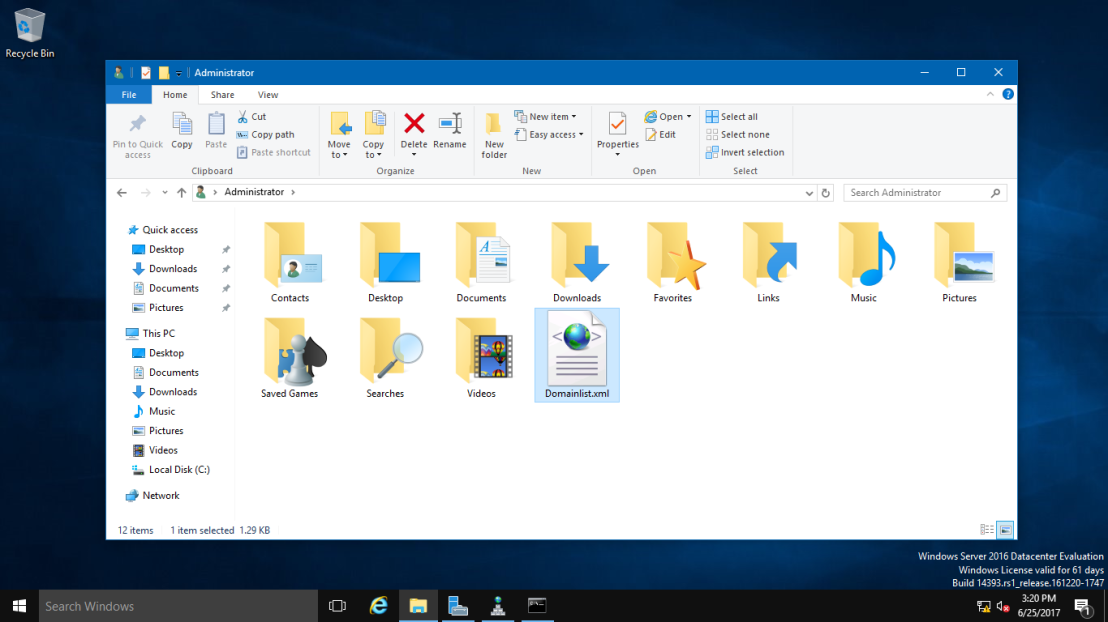 14 – Once you see the `Domainlist.xml`, right click the file name & choose `Edit`. I going to change the DNSname and NetBiosName in this `Domainlist.xml file`. 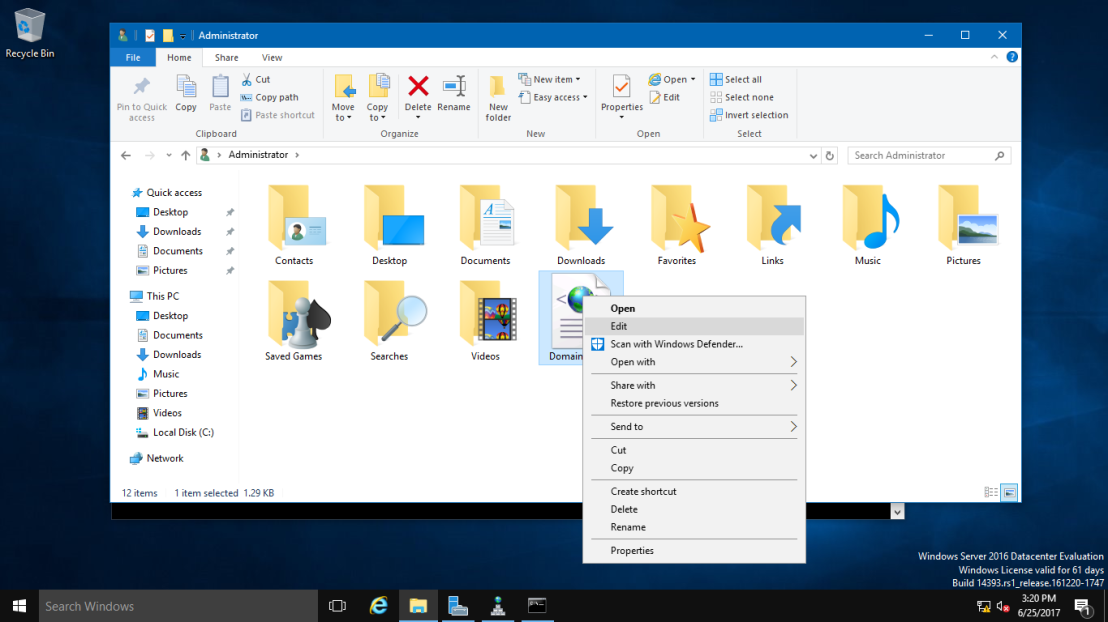 15 – Once the `Domainlist.xml` open, you can see there are few existing Domain name, `change this existing domain name to new domain name`. (**Refer to picture**) 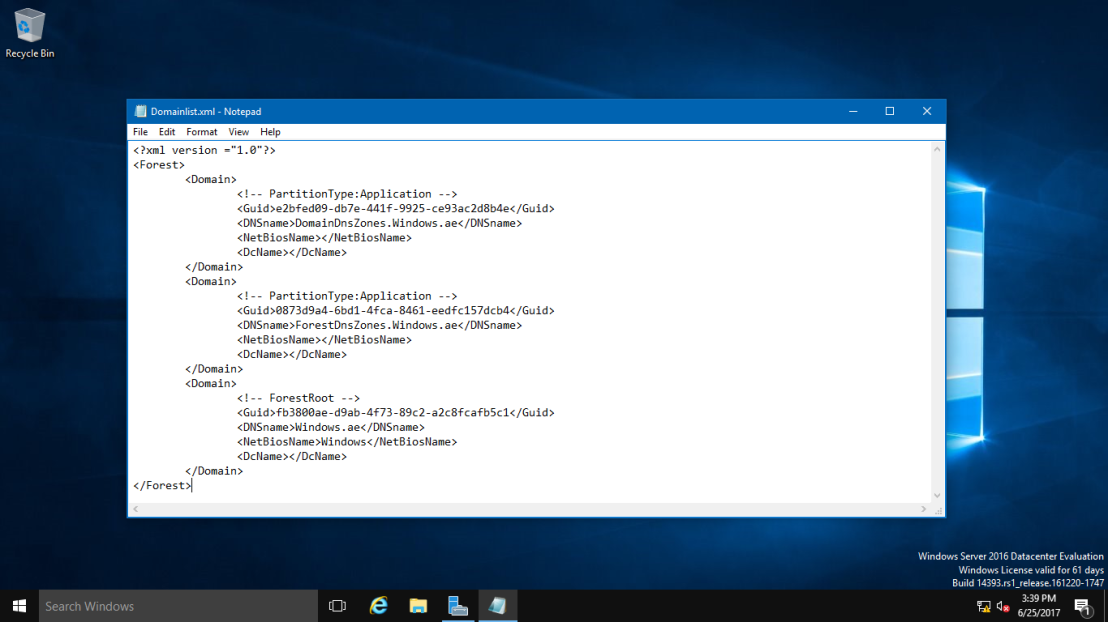 16 – once you change to new Domain name, make sure you save the `Domainlist.xml` file. 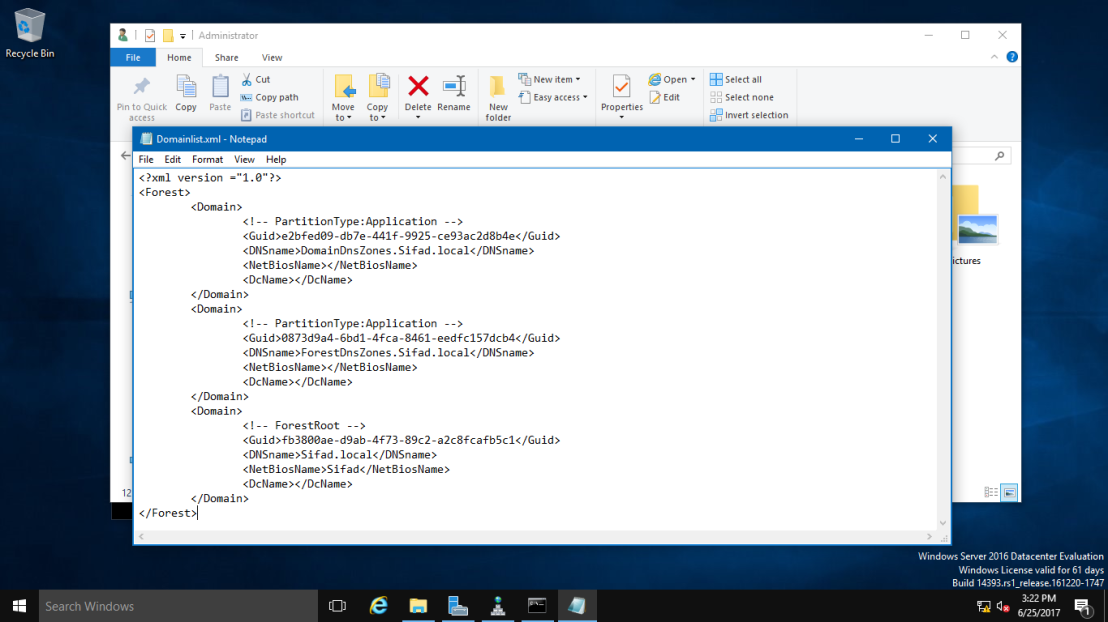 17 – After you save the `Domainlist.xml` file, On the CMD, type `rendom /showforest`. This is to show the potential changes; this step does not make any changes. 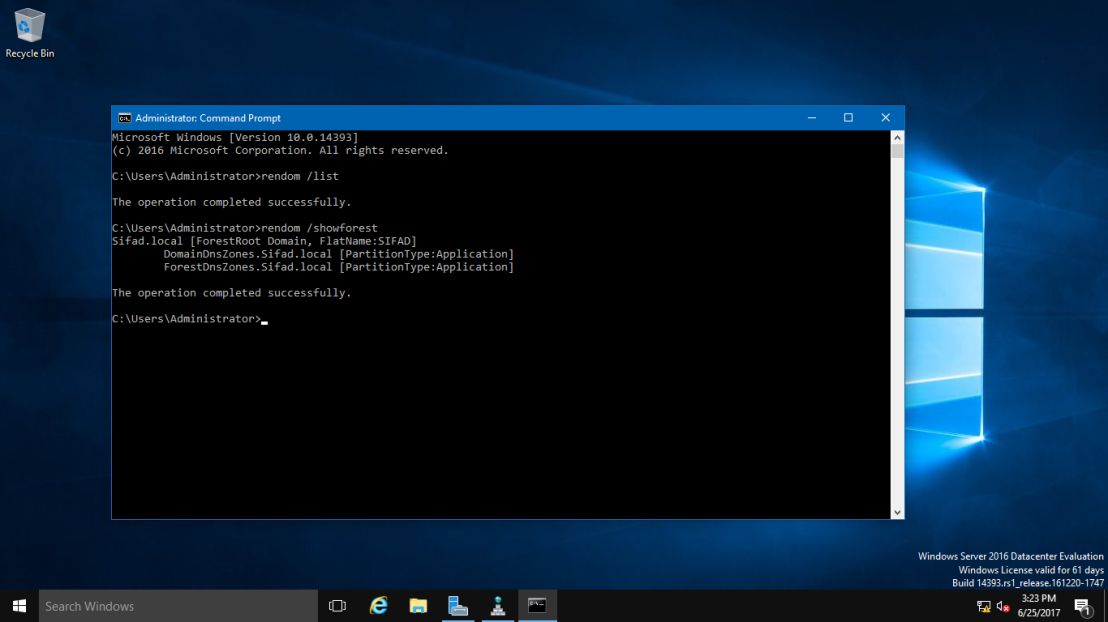 18 – Next, type `rendom /upload`. This is to upload the rename instructions (`Domainlist.xml`) to the configuration directory partition on the domain controller holding the domain naming operations master role. 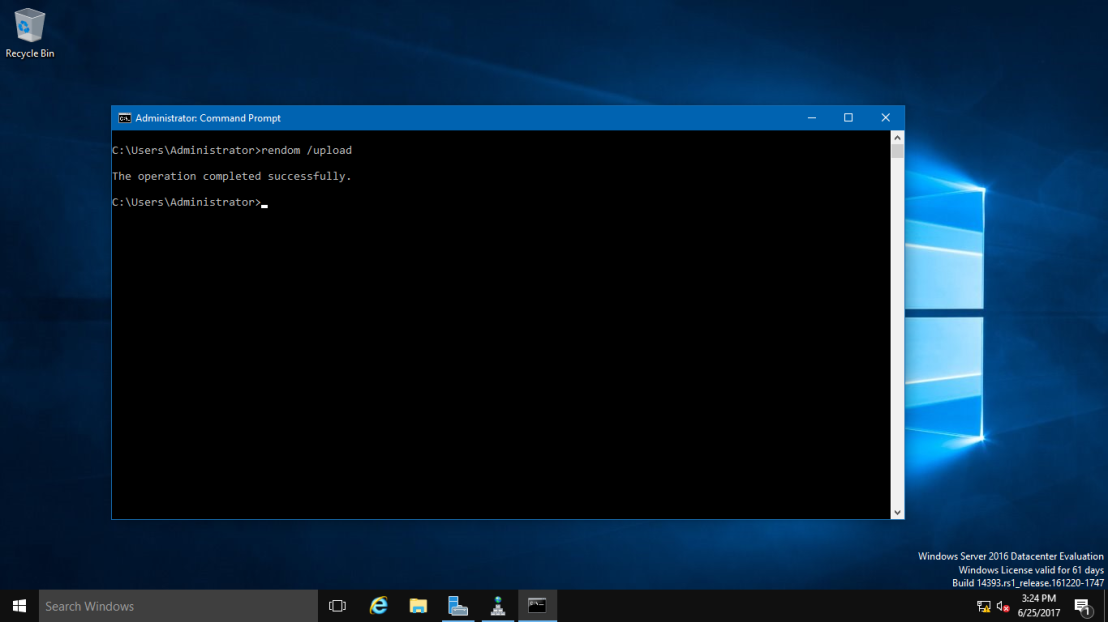 19 – Next, type `rendom /prepare`. This use to verify the readiness of each DC in the forest to carry out the rename instructions. This should contact all DC’s successfully and return no errors before proceed to next process. 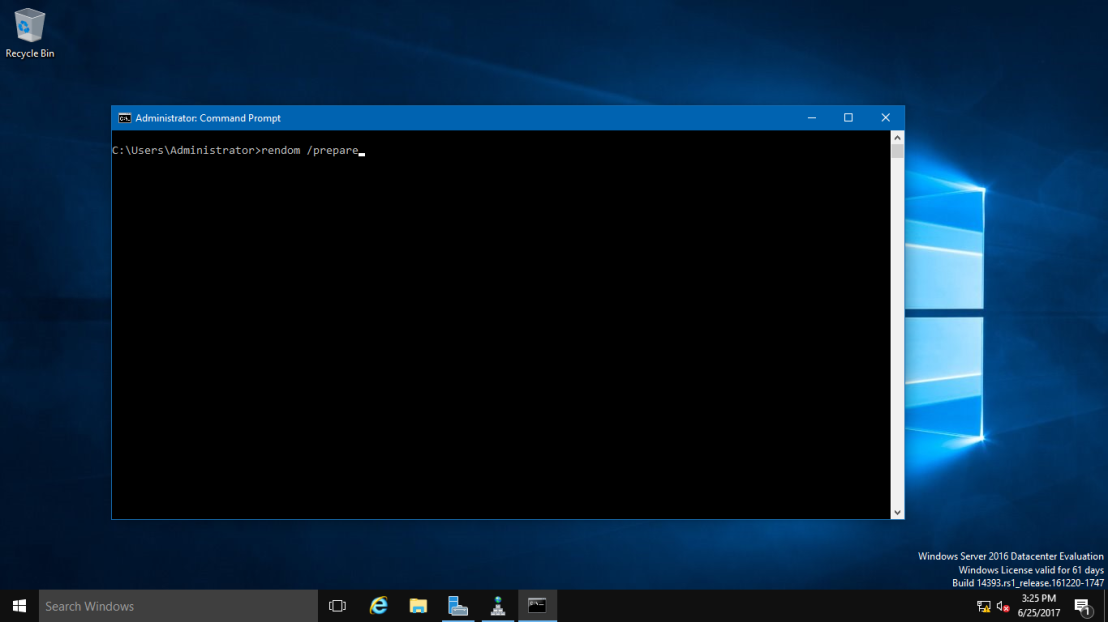 20 – Next, type `rendom /execute`. This is to `verifies readiness` of all DC’s and then preforms the rename action on each one.“**Remember also there will be a service interruption during this process. Once the process successful, your DC Server will be restarted.**”
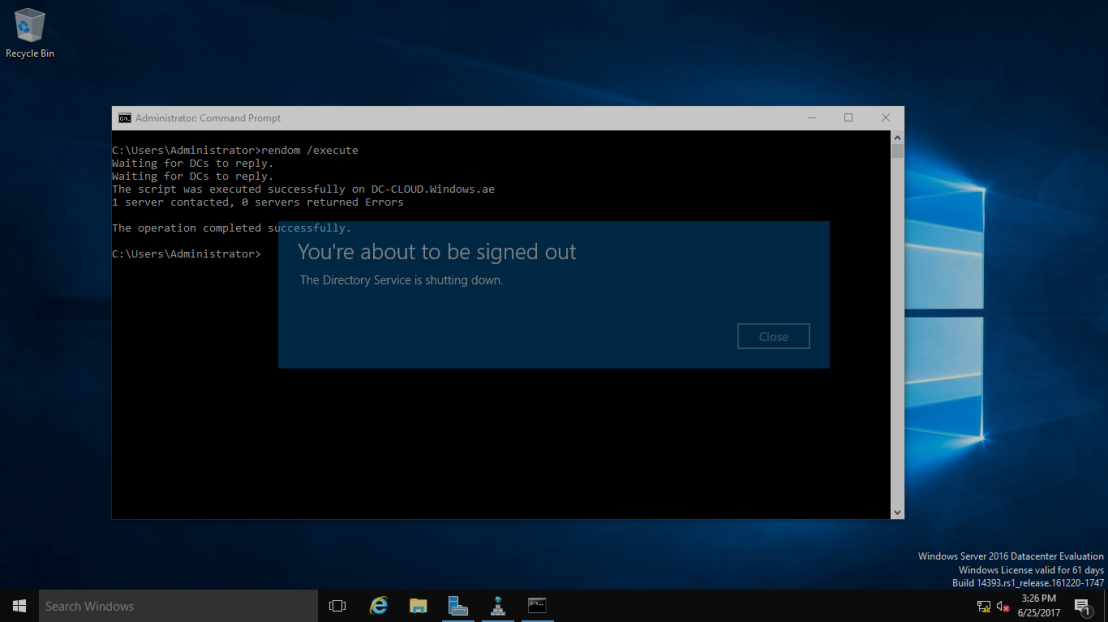 21 – Once your DC Server restarted, `log in using the new Domain name as Administrator`. 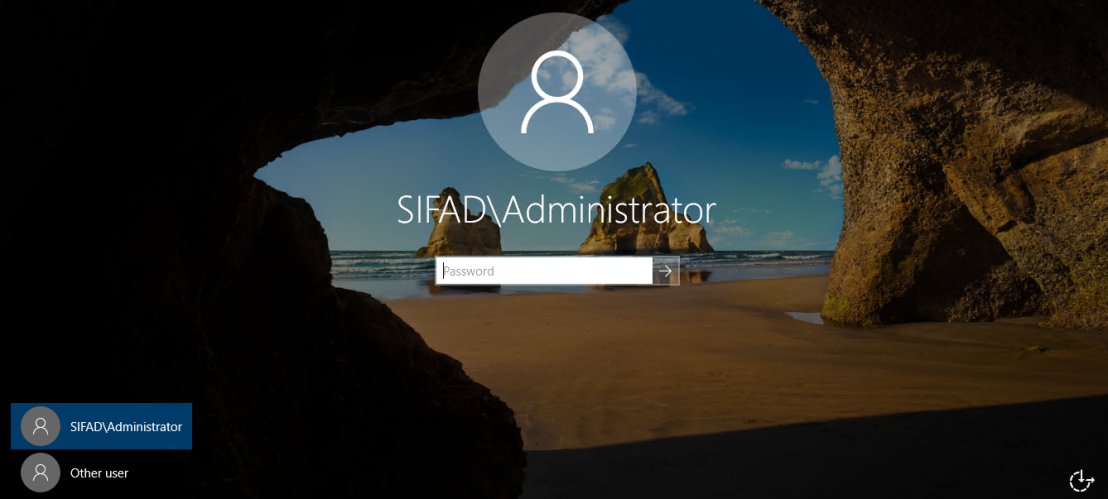 22 – Next, after you successfully log in, open `System Properties` and `check your old Domain Name is now gone`. Replace by new Domain name. 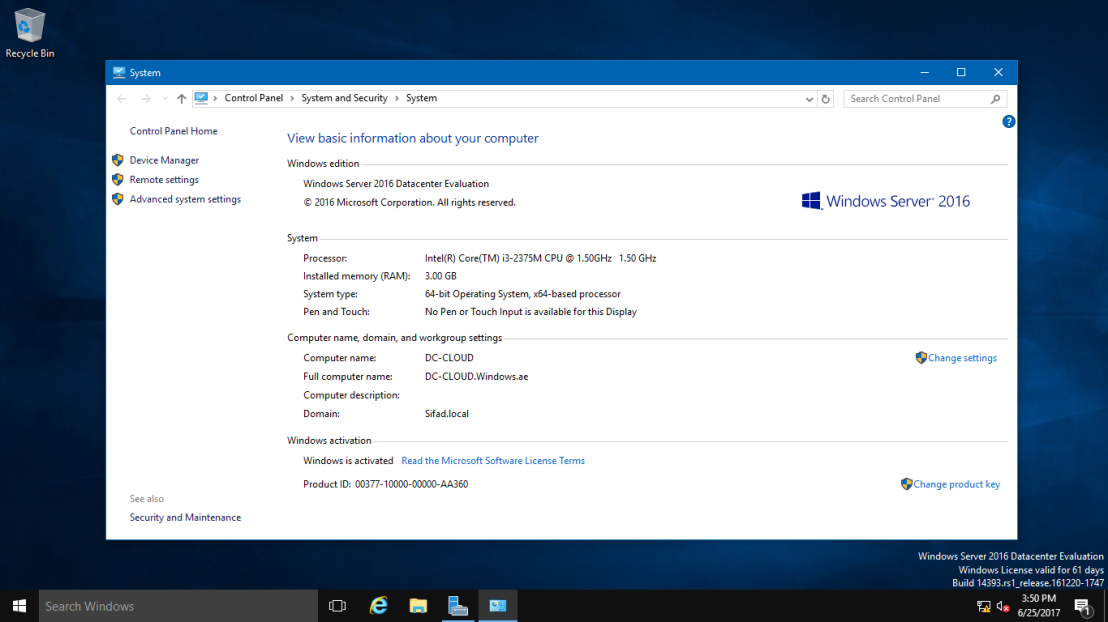 23 – Next, open `CMD` again, and type `gpfixup /olddns:windows.ae /newdns:sifad.local` This is to refresh all `intra Domain` references and links to group policy objects. 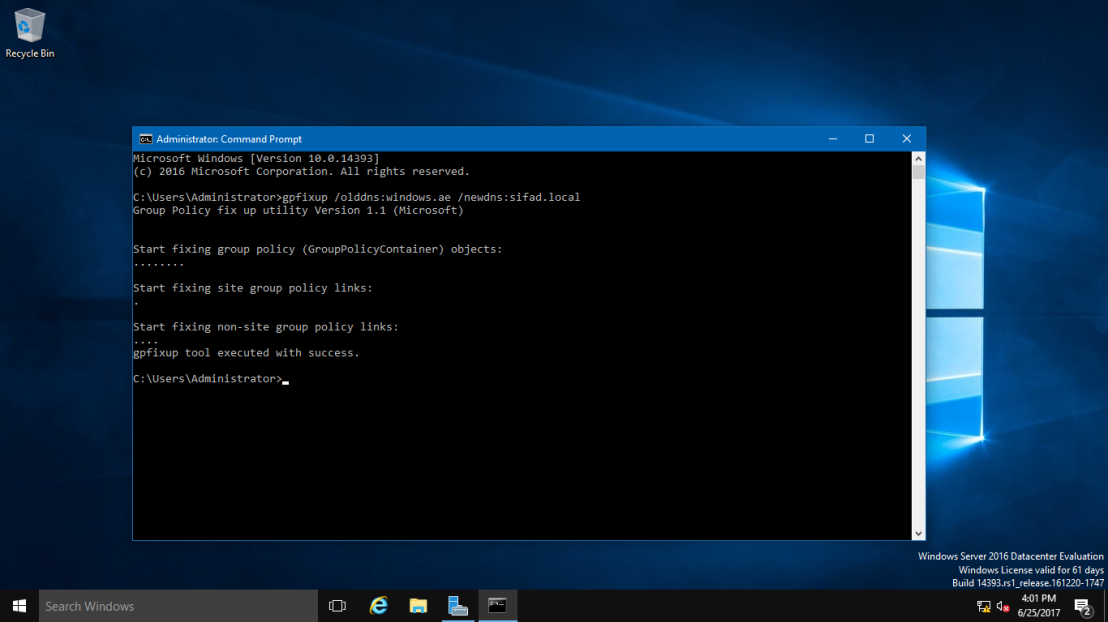 24 – Next, type `gpfixup /oldnb:DC-CLOUD /newnb:sifad`. 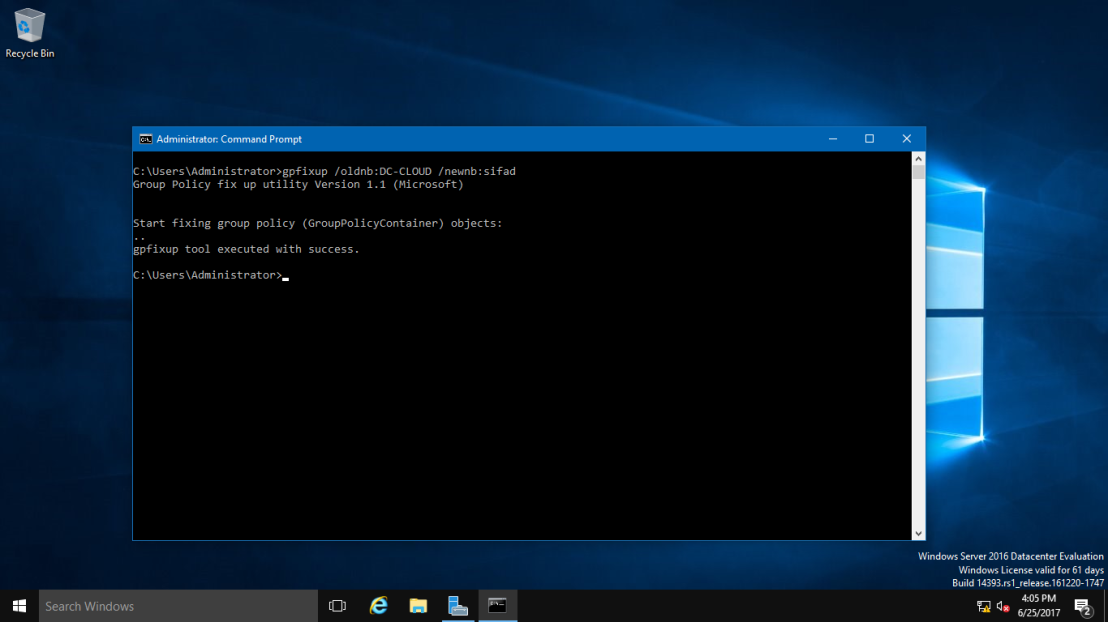 25 – Next, type `rendom /clean`. This is to remove references of the old domain name from AD. 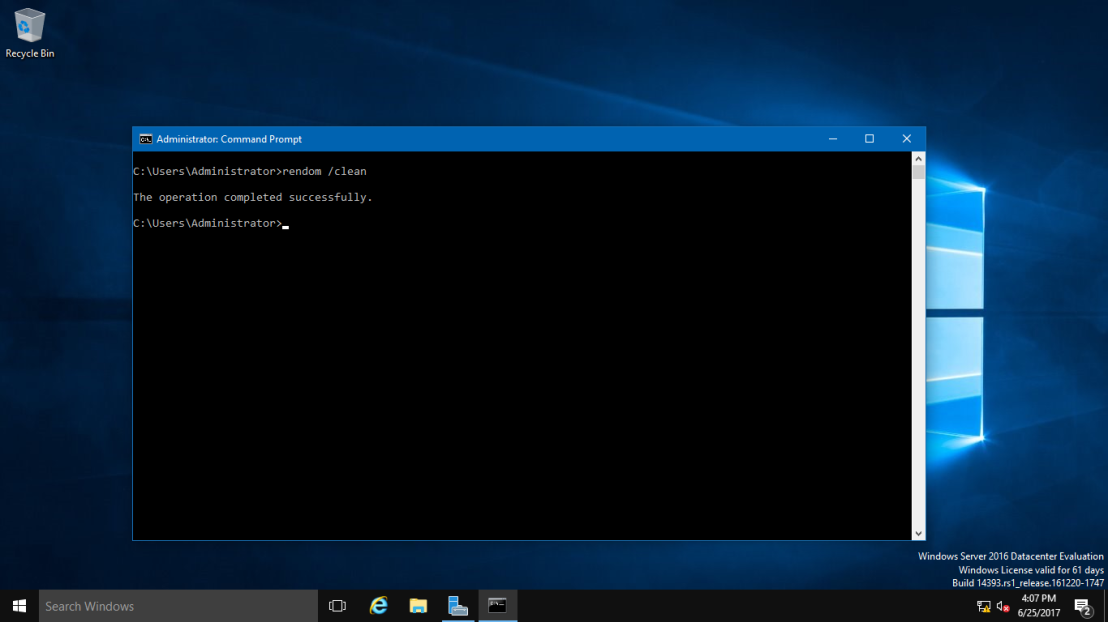 26 – Next, type `rendom /end`. This is to unfreeze the forest configuration and allow further changes. This was frozen during the rendom /upload step. 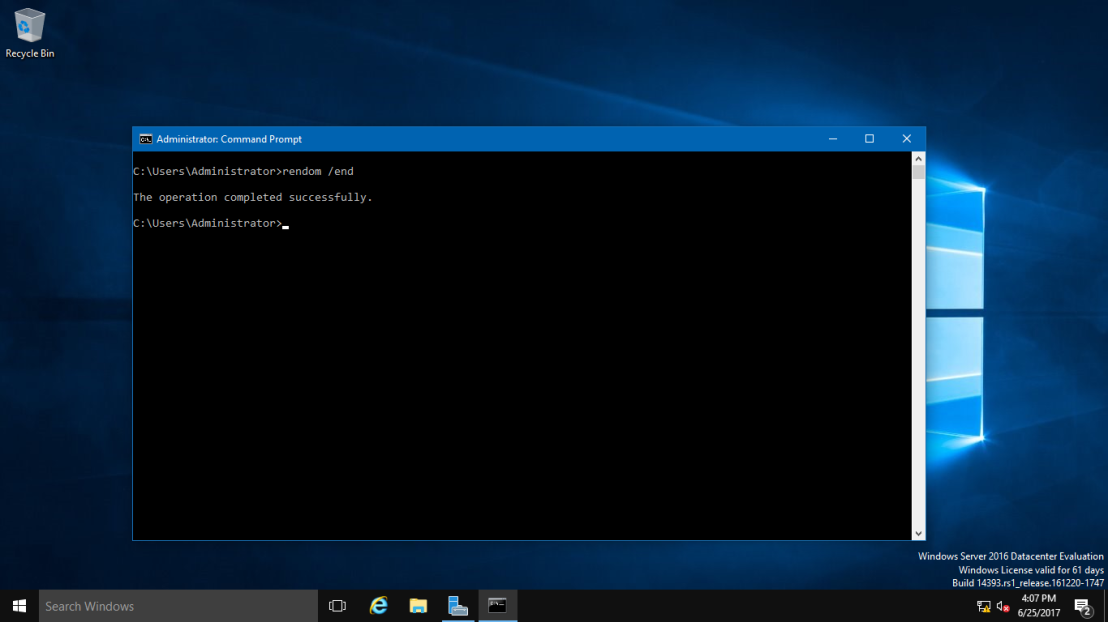 27 – Next, Open `DNS Manager`, click your new created domain (`Sifad.local`), here you can see your own IP listed but we still have long way to go to make sure this DNS Zone is working. 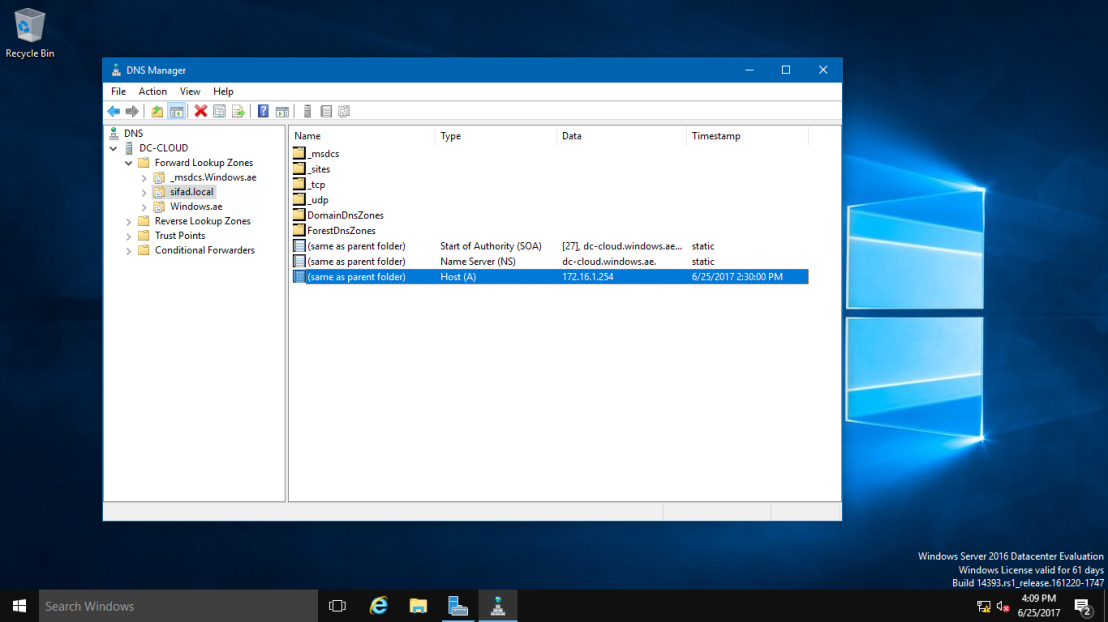 28 – Next, turn on your `client PC`, for this exercise I’m using `Windows 10` as a client. Open `System Properties` and `join to new Domain` (`sifad.local`). Windows Security box will show up and now `key in administrator and domain password` and click OK (`Welcome to the sifad.local domain`). (Refer pictures)  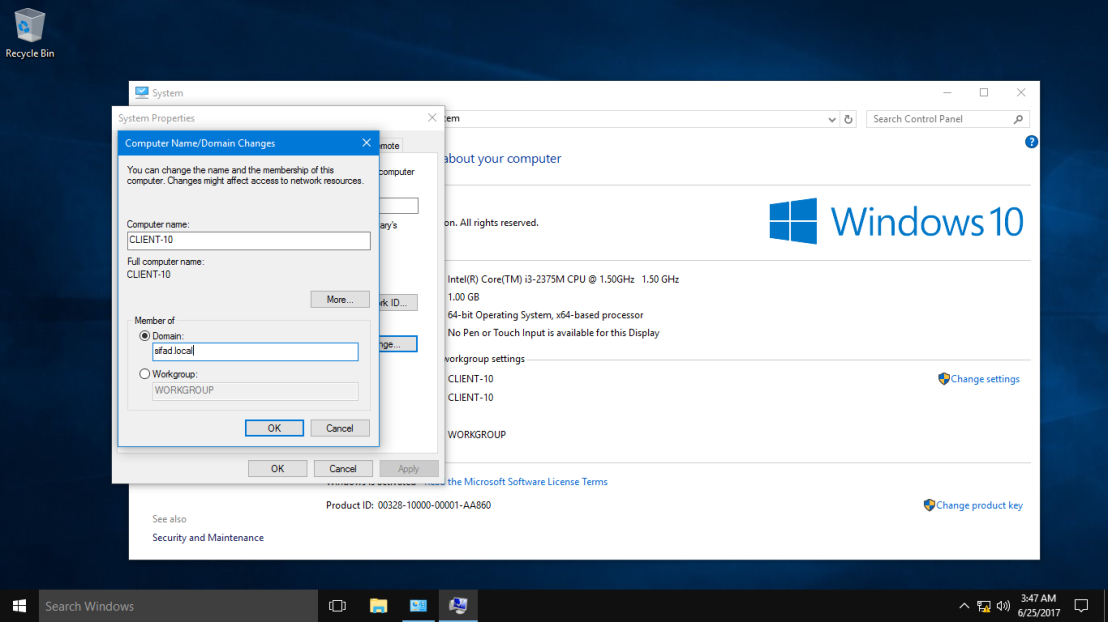 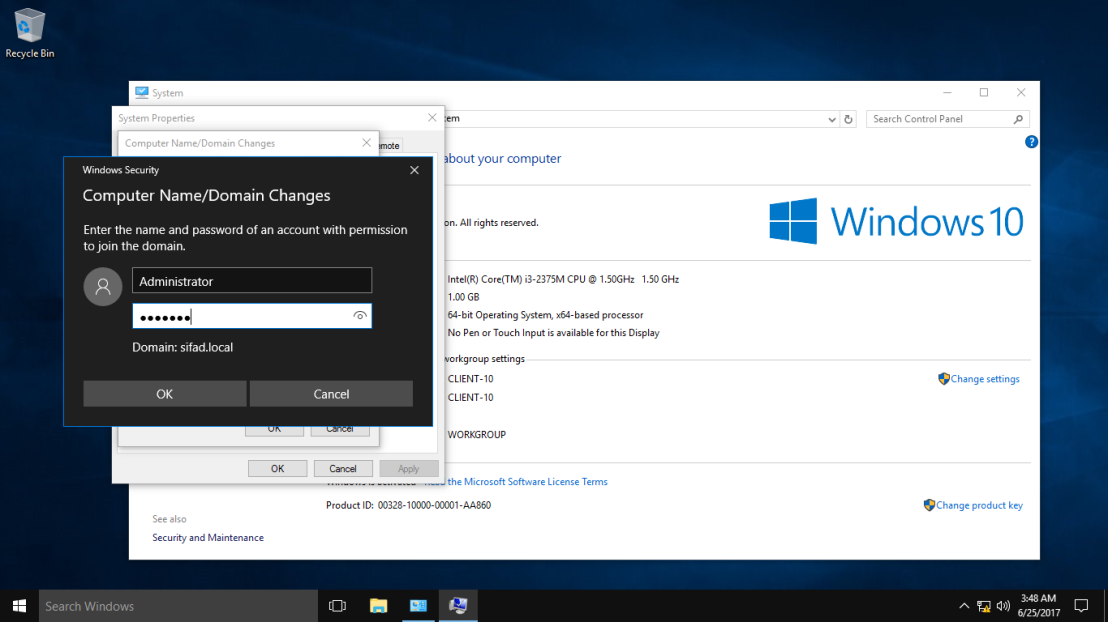 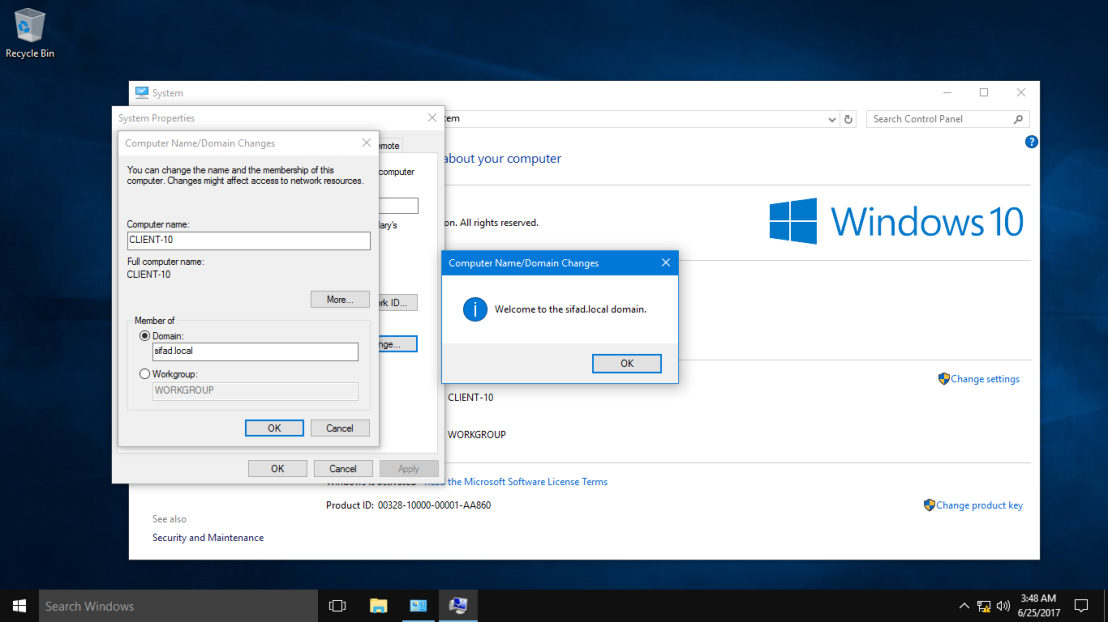 29 – After your Windows 10 restart, `log in as a domain administrator`. 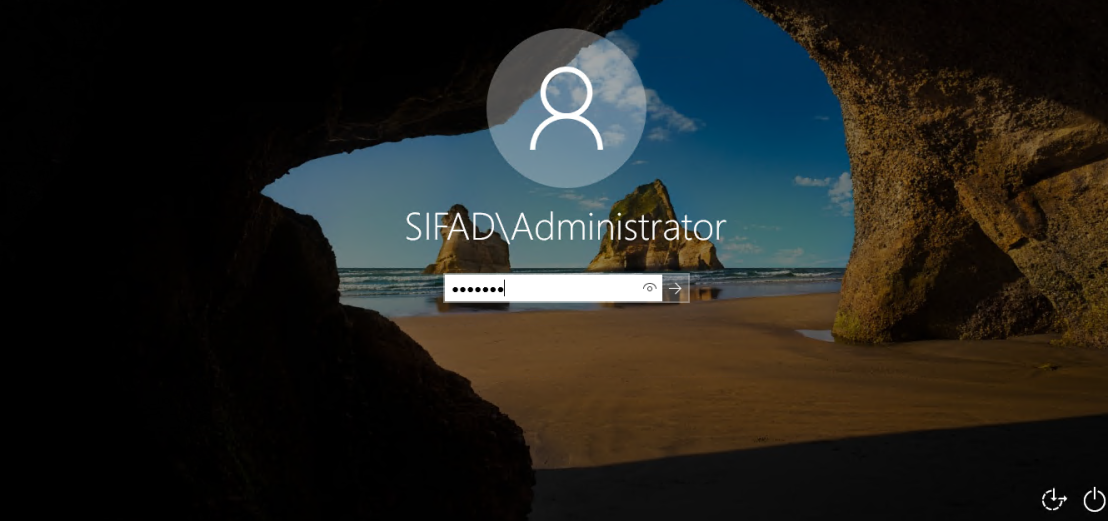 30 – Once you log in, `double check Windows 10 System Properties`. Now your `Windows 10 successfully join in to new Domain` (`Sifad.local`). 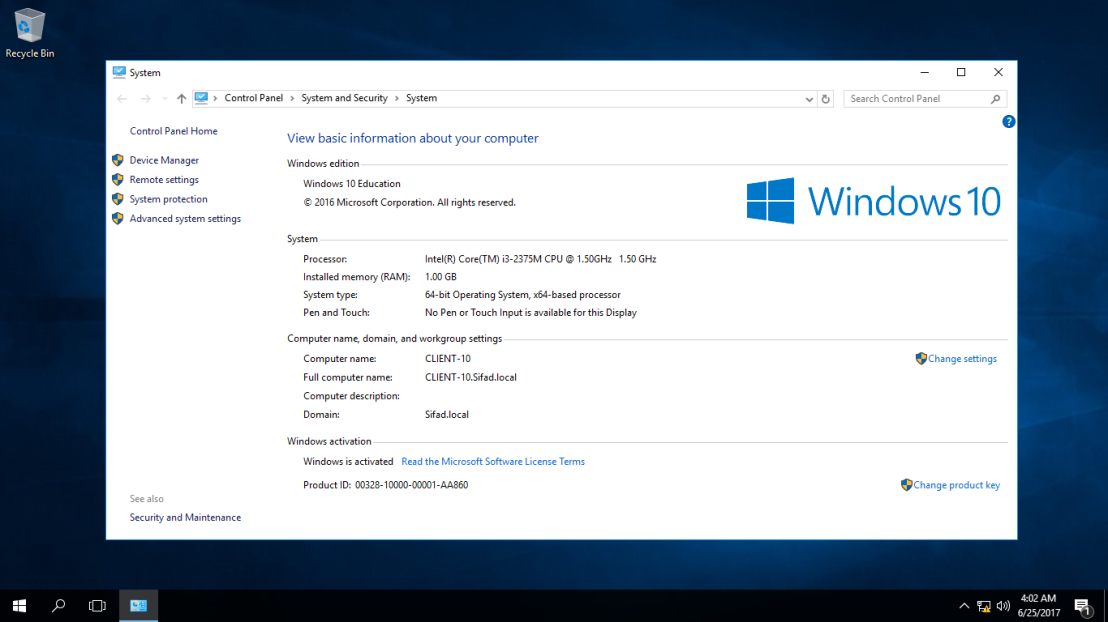 31 – Now, go to the Server 2016 and `open DNS Manager`, you can see now your `Windows 10 Client is listed in DNS`. 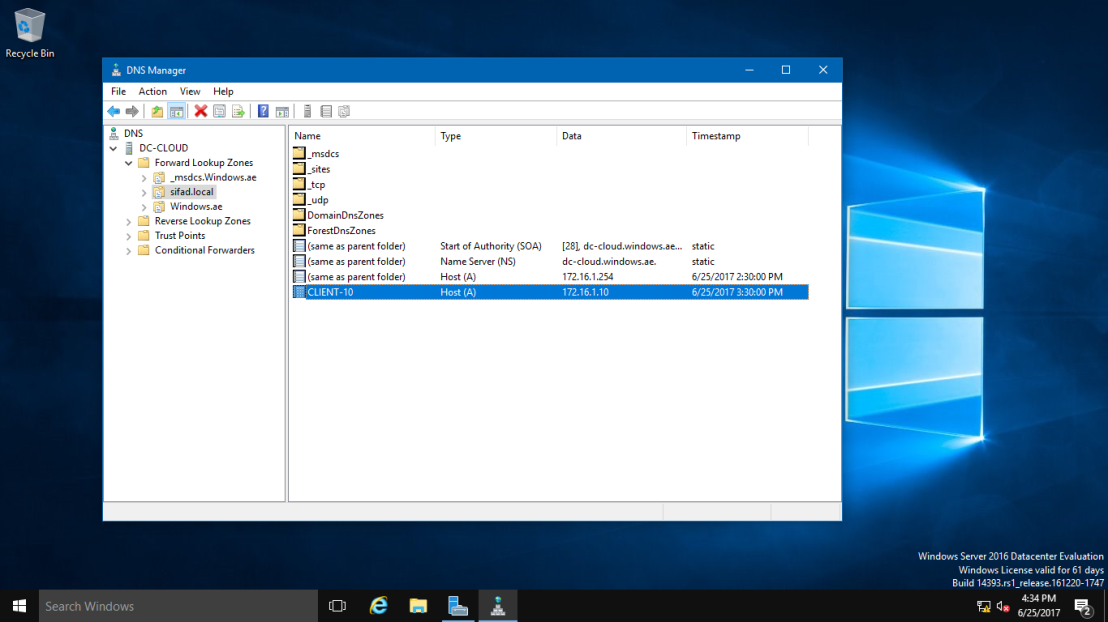 32 – You can also check in `Active Directory Users & Computers` that your Windows 10 Client now also listed. 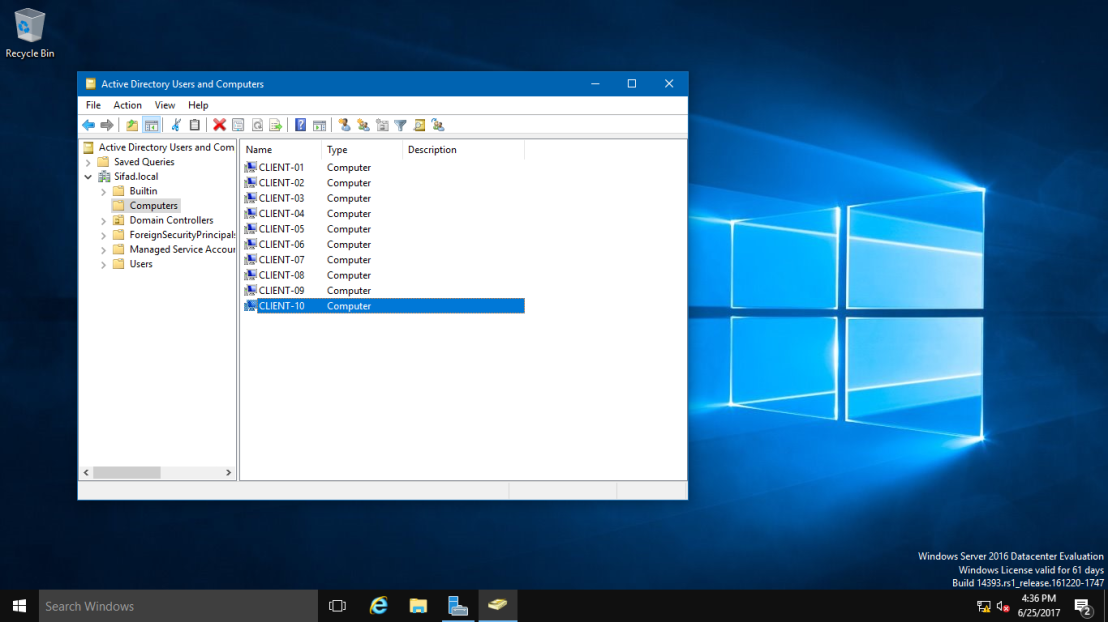 This ends the rename process and we have a dc now with a new domain name. [Original Article](https://newhelptech.wordpress.com/2017/06/25/step-by-step-how-to-rename-domain-name-in-windows-server-2016/)